Social Responsibility Driven Financial Intermediation
Innovative and technological pathways to maqasid-aligned transformations
Best with headphones. Turn pages with the arrows, your keyboard, or by dragging a corner.
Drag a page corner or use ← → to turn
Cambridge Global Islamic Finance Report
GIFR 2026
Social Responsibility Driven Financial Intermediation
Innovative and Technological Pathways to Maqasid-aligned Transformations
Published by
Strategic Partner
Knowledge Partner
Cambridge Global Islamic Finance Report
GIFR 2026
Published by
Produced by
GIFR is the official publication of Cambridge Institute of Islamic Finance and is produced by Cambridge IFA.
About Cambridge Institute of Islamic Finance
Cambridge Institute of Islamic Finance – Cambridge-IIF – is an independent research centre, specialising in the financial sectors of the countries wherein Islamic banking and finance is a significant activity. Leveraging upon the academic resources the city of Cambridge has to offer, Cambridge-IIF is well-positioned to undertake research projects to study the global phenomenon of Islamic banking and finance. Cambridge-IIF aims at conducting policy-oriented research to further spur growth in Islamic banking and finance, with a special focus on the Sustainable Development Goals (SDGs).
About Cambridge IFA
Cambridge IFA is a financial services intelligence house that specialises in developing and utilising powerful cutting-edge analytical tools to evaluate business data, assess macroeconomic indicators and understand market trends, leadership positioning and brand development relevant to the development of the financial services industry globally. For more information visit www.cambridge-ifa.net
Please cite this report as: Cambridge Institute of Islamic Finance (2026). Global Islamic Finance Report 2026. London: United Kingdom.
Acknowledgements
We are thankful to all the organisations and institutions that have supported this industry-building initiative of immense importance. Being the first global annual report on Islamic banking and finance, GIFR has played a pioneering role in providing Islamic financial intelligence to all the stakeholders in the industry. The following institutions deserve special appreciation for contributing to the success of this venture. Without their support, it would have been difficult for us to bring this edition of GIFR.
Strategic Partner
Knowledge Partner
Founder & Editor-In-ChiefDr Humayon Dar
International Advisory BoardChairmanShahid MalikFormer International Development Minister, UKMembersSheikh Nedham Yaqubi - Shari’a ScholarDr Mian Farooq Haq - State Bank of PakistanDato’ Dr Asyraf Wajdi Dusuki - Islamic Finance ExpertDr Rizwan Malik - Bahrain Institute of Banking and FinanceMufti Talha Azami - Shari’a ScholarSohail Jaffer - Capita Middle EastMuhammad Saleem Ahmed Ranjha - Wan Miana Rural Development Programme
Senior EditorSara Ahmad
Associate EditorsKanwal Javed & Ramsha Mughal
Assistant EditorEman Fatima
Senior Visual DesignerKhalil Ahmed
Junior DesignerZeeshan Yousaf
Websitehttps://gifr.cambridge-ifa.net
PublisherCambridge Institute of Islamic FinanceEmail: info@cambridge-iif.com
Advertisements, Commercial and Subscription EnquiriesEmail: gifr@cambridge-ifa.net
Disclaimer
All rights reserved. No part of this publication may be reproduced, stored in a retrieval system, or transmitted, in any form, or by any means electronic, mechanical, photocopying, recording or otherwise, without the prior permission of the author concerned and/or Cambridge Institute of Islamic Finance, except by a reviewer who may quote brief passages in publishing review. The opinions and positions expressed by the authors of this publication are not necessarily the opinions of Cambridge Institute of Islamic Finance, the co-editors or sponsors. None of the above individuals or organisations necessarily endorses any of the methods or conclusions contained herein. Readers of this publication should independently verify any information through competent legal, tax, accounting, banking and other experts of their choice. Publisher will not be responsible for any errors, omissions or misrepresentation, if there are any.
Dr Hussain Mohi-ud-Din Qadri, Deputy Chairman, Board of Governors, Minhaj University Lahore23
Table of Acronyms24
Part 1: Global Islamic Financial Services Industry
Chapter 1: Overview of the Global Islamic Financial Services Industry29
Chapter 2: Islamic Finance Country Index – IFCI 202643
Part 2: Circular Economy based Alternatives to the Current Forms of Financial Intermediation
Chapter 4: Circular Economy-based Alternative Models to the Currently Adopted Forms - An Overview69
Part 3: Waqf-based and Sustainability-aligned Model for Financial Intermediation
Chapter 6: Waqf-based and Sustainability-aligned Model for Financial Intermediation – An Overview91
Chapter 7: Waqf-based Sustainability Through Malaysia Social Exchange (Impakrintas)99
Chapter 8: Operational Frameworks and Institutionalisation of Sustainability-aligned Waqf Models113
Chapter 9: Legal and Regulatory Foundations for Waqf-based Financial Intermediation121
Part 4: Commodity-based Alternatives to the Current Forms of Financial Intermediation
Chapter 10: A Study of Commodity-based Alternatives to the Current Forms of Financial Intermediation137
Part 5: Technological and Innovative Alternatives to the Current Forms of Financial Intermediation
Chapter 11: Innovative Pathways towards Maqasid-aligned Socially Responsible Islamic Finance155
Chapter 12: Impact of Next Gen AI-driven FinTech on the Current Forms of Financial Intermediation169
Chapter 13: A View from the Engine Room of Islamic Financial Technology – Case Study of Nigeria195
Chapter 14: The Elephant of Debt and the Promise of Islamisation203
Index of Terms and Bibliography301
EditorialTeam
Sara Ahmad
Senior Editor Cambridge-IFA
Sara Ahmad is the lead editor at Cambridge-IFA. She has served in the domains of Information Technology, Health Technology and Islamic Finance. Experienced in collaborating with several multilateral agencies, she joined Cambridge-IFA, a global Islamic finance advocacy platform, transitioning from Health Information Technology to Islamic Banking and Finance with the aim of documenting and catalysing the industry’s progress in this era of transformative change. She completed her post-graduation in Information Technology from National University of Science and Technology (NUST), Pakistan.
Kanwal Javed
Associate Editor Cambridge IFA
Kanwal Javed is an Associate Editor at Cambridge IFA, with an academic background in English Language and Literature and experience in editing, proofreading, and reviewing professional publications. Her expertise includes language, style, structure, and editorial consistency, helping authors communicate their ideas with clarity, precision, and impact while preserving their individual voice. She ensures that content is grammatically accurate, stylistically coherent, and well-structured. Through her work at Cambridge IFA, she contributes to maintaining high editorial standards and developing polished, engaging, and high-quality publications.
Ramsha Mughal
Associate Editor Cambridge IFA
Ramsha Mughal is an Islamic banking and finance enthusiast and Associate Editor at Cambridge IFA, where she contributes to editorial excellence through proofreading, writing short articles and ensuring content coherence. She holds an MS in Islamic Banking and Finance from the International Islamic University Islamabad, Pakistan. Her experience in the Islamic Microfinance Division of a microfinance bank gave her practical exposure to Islamic financing and product utilisation. She aspires to become an Islamic finance specialist and contribute meaningfully to the industry’s growth.
Eman Fatima Rana
Associate Editor Cambridge IFA
Eman Fatima Rana is an Associate Editor at Cambridge IFA with a strong academic background in English and linguistics. A gold medalist in English, she holds an MPhil in Linguistics from Bahauddin Zakariya University. As an avid reader, she credits her love for reading as the foundation for her strong editorial eye. At Cambridge IFA, she ensures complex Islamic finance concepts are communicated clearly and accurately, using her linguistic expertise. She helps authors present ideas with precision while preserving their voice, contributing to high-quality publications.
The fundamental question for the next fifty years of Islamic finance is no longer simply: what problems are we trying to solve? The original ambition, to create a parallel financial industry that provides Muslims with Shari’a-compliant alternatives to conventional finance, was necessary and transformative. Yet, as Islamic finance has matured into a substantial global industry, compliance alone is no longer sufficient as its defining ambition. The next phase requires a deeper transition: from compliance to consciousness. Islamic finance must increasingly ask not only whether a financial transaction is permissible, but whether it contributes to human wellbeing, economic justice, shared prosperity and the responsible stewardship of resources.
At the heart of this transformation lies the concept of Capital as Amana: capital not merely as an instrument of accumulation, but as a trust carrying responsibilities towards people, society
and future generations. This perspective can help reposition finance from an extractive mechanism towards a force for productive, inclusive and sustainable economic activity. The ultimate ambition is therefore a credible solution for humanity: helping repair an economy weakened by excessive debt, inequality, short-termism and declining trust. The next fifty years should move Islamic finance beyond building a successful industry towards building economies with a heart, economies in which finance serves human flourishing and the common good.
The pioneers who had a role in the revitalisation of the industry during the past fifty years dedicated efforts with conviction to transform a moral aspiration into an institutional reality. Their task was both practical and historic: to mobilise faith-sensitive savings and channel them into trade, investment and infrastructure while demonstrating that financial activity could operate within an ethical and Shari’a-based framework. In doing so, they established the foundations of Shari’a governance, standards, legal precedent, scholarship and professional capability. Islamic finance also helped bring millions of people into formal financial systems and, across several post-colonial economies, contributed to the development of greater financial sovereignty and locally rooted financial institutions. Among those who shaped this formative journey were Sheikh Saeed Lootah, Sheikh Saleh Kamel, Prince Mohammed Al Faisal, Dr
The Next Fifty Years of Islamic Finance - From Compliance to Consciousness, Capital as Amana, Economies of the Heart | Chapter 3
Global Islamic Finance Report 2026 | 66
01
The next fifty years should move Islamic finance beyond building a successful industry towards building economies with a heart, economies in which finance serves human flourishing and the common good.
02
Global Islamic financial ecosystem with US$5.78 trillion in Islamic finance assets in 2025, reflecting 16.73 per cent year-on-year growth, with a presence extending across 140 countries and supported by more than 1,500 Islamic financial institutions worldwide.
03
To develop a morally aligned financial system, the operating principle must be Capital as Amana: a trust, not a possession.
04
Global public debt stands at a record US$102 trillion, while developing countries paid a record US$921 billion in interest in a single year, and 3.4 billion people now live in countries that spend more on interest payments than on health or education.
05
Our hisba tradition teaches that market oversight is a public trust. As allocator and partner, the state funds what markets under-supply, in the tradition of Smith’s public works and the Bayt al-Mal, providing catalytic guarantees, anchor capital and sovereign sukuk for real infrastructure.
06
Waqf 2.0 proposes professionally governed, transparent and productive endowments that can become a significant pillar of the modern Islamic economy.
07
In full-reserve, or narrow banking payment deposits are backed one hundred per cent by safe assets and credit is financed by investors who knowingly bear risk.
08
Rearchitecting intermediation around asset management would give practical effect to the shift from debt bias to risk-sharing at the level of system design rather than product labelling, and it would position Islamic finance not as a variant of a fragile model, but as a leader of a safer one.
Ahmad Mohamed Ali Al-Madani and Royal Professor Ungku Aziz, alongside many other scholars, entrepreneurs, policymakers, bankers and institution-builders. Their collective contribution extended far beyond establishing banks. They created markets, regulatory frameworks, standards, intellectual traditions and human capital that enabled Islamic finance to evolve into a global industry. The pioneers built a bridge. Our generation must now decide where that bridge should lead. The achievement of the first fifty years was to prove that Islamic finance could exist, grow and institutionalise itself. The challenge of the next fifty is to determine how that institutional foundation can serve a wider human purpose.
The first fifty years proved that Islamic finance could exist, grow and institutionalise itself. The challenge of the next fifty is to determine how that institutional foundation can serve a wider human purpose.
The Islamic finance industry today represents an extraordinary achievement in institutional development, global reach and financial innovation. From its relatively modest beginnings, it has evolved into a global ecosystem with US$5.78 trillion in Islamic finance assets in 2025, reflecting 21 per cent
Chapter 3 | The Next Fifty Years of Islamic Finance - From Compliance to Consciousness, Capital as Amana, Economies of the Heart
69 | Global Islamic Finance Report 2026
year-on-year growth, with a presence extending across 140 countries and supported by more than 1,500 Islamic financial institutions worldwide. These figures represent more than scale: they demonstrate the ability of an idea rooted in faith, ethics and responsible finance to develop into a significant component of the international financial system.
Over five decades, Islamic banking, sukuk, takaful, Islamic investment and social finance have created institutions, markets, standards, professional capabilities and regulatory frameworks that reach far beyond the countries in which the industry first emerged. Yet these achievements also invite a more fundamental question about the next stage of its evolution. Scale is no longer the question. Purpose is. The challenge ahead is not simply to increase assets, institutions or market share, but to consider what this considerable financial capacity should ultimately accomplish. Can the industry translate its principles into broader economic and social value, strengthening inclusion, trust, sustainability, shared prosperity and human wellbeing? The next fifty years therefore require Islamic finance to move from demonstrating that it can grow to demonstrating what its growth can meaningfully achieve.
InspirationalDissatisfaction
The critique of the current Islamic financial industry is fair. Too much of Islamic finance has been characterised by replication, debt-like structuring and an excessive emphasis on legal form,
The Next Fifty Years of Islamic Finance - From Compliance to Consciousness, Capital as Amana, Economies of the Heart | Chapter 3
Global Islamic Finance Report 2026 | 70
while too little attention has been given to genuine risk-sharing, measurable impact and the wider social imagination that the discipline can inspire. Yet the critique should not become a verdict. Islamic finance grew out of post-colonial economies in which the immediate priorities were to mobilise savings, broaden financial inclusion, establish institutional legitimacy and build credibility within financial systems largely designed around conventional models. In that context, gradualism was not only understandable; it was often necessary. The bridge that Islamic finance built between principle and practice served a vital purpose. But a bridge is a means of transition, not the destination. There is a useful precedent outside our tradition. John C Bogle built Vanguard and then spent much of his later life as his own industry’s most loving and persistent critic. His dissatisfaction was not destructive; it was disciplined, constructive and ultimately transformative, helping give the world its first index fund. Islamic finance now needs a similar spirit of insider dissatisfaction. We must ask not only, “Is this transaction permitted?” but also: What does it make possible? Who benefits? Who carries the risk? What remains after the return is distributed?
TheOperatingPrinciple:CapitalasAmana
These questions need to be considered in the light of the Qur’an: “We offered the Trust to the heavens, the earth and the mountains... yet humanity accepted it” (Qur’an 33:72). The verse highlights the importance of trust as an operating principle. To
Chapter 3 | The Next Fifty Years of Islamic Finance - From Compliance to Consciousness, Capital as Amana, Economies of the Heart
71 | Global Islamic Finance Report 2026
develop a morally aligned financial system, the operating principle must be Capital as Amana: a trust, not a possession. This profound verse reminds us that capital is not something we own absolutely, but something we hold in trust. Amana asks three questions of capital: How was it earned? How is it deployed? Who bears the consequences? These questions create three corresponding trusts. First, to Allah (SWT): justice, transparency, no riba or gharar, and a genuine sharing of risk and reward. Second, to community: households, entrepreneurs, workers, and those still excluded from opportunity.
Third, to the future generations who will inherit the institutions, environment and the social fabric that our capital creates. Compliance is the minimum possible requirement of this transformation and it is not an end in itself. Consciousness elevates financial principles beyond mere legal form and carries the purpose of Shari’a into every allocation decision in the service of the whole of humanity. This principle, Capital as Amana, challenges us to move beyond minimal legal compliance towards a deeper ethical consciousness that animates every financial decision
The Next Fifty Years of Islamic Finance - From Compliance to Consciousness, Capital as Amana, Economies of the Heart | Chapter 3
Global Islamic Finance Report 2026 | 72
Global public debt stands at a record US$102 trillion, while developing countries paid a record US$921 billion in interest in a single year, and 3.4 billion people now live in countries that spend more on interest payments than on health or education
ADifferentMoralArchitecturefortheGlobalEconomy
The prevailing financial system persists without a soul, reducing many of the world’s economies to debt-ridden architectures. The urgent need today is for a different moral architecture underpinning the financial system. Consider the current state: global public debt stands at a record US$102 trillion, while developing countries paid a record US$921 billion in interest in a single year, and 3.4 billion people now live in countries that spend more on interest payments than on health or education. Global growth is projected at just 2.5 per cent in 2026, the slowest pace since the pandemic. Owners’ capitalism has mutated into managers’ capitalism, where agents are rewarded ahead of the owners they serve; a phenomenon that John C Bogle warned about extensively.
Chapter 3 | The Next Fifty Years of Islamic Finance - From Compliance to Consciousness, Capital as Amana, Economies of the Heart
73 | Global Islamic Finance Report 2026
We see leverage and quarterly extraction, where gains are privatised and losses socialised. Zero-sum fragmentation prevails just when climate, food and health demand cooperation. In contrast, the Islamic architecture offers a compelling alternative. It offers capital connected to real assets and productive enterprise, risk shared and not transferred to the weakest party, returns earned with responsibility, wealth circulated and not merely accumulated, and finance judged by its contribution to adl, ihsan and human dignity. We are not swapping one label for another. Instead, we are building role-model institutions and economies whose outcomes speak for themselves. Our task is to help give capitalism back its moral compass, drawing on Islamic principles that have always emphasised justice, risk-sharing and the circulation of wealth.
TwoWitnessesfromtheHeartofCapitalism
Two witnesses from the heart of capitalism itself, Adam Smith and John C Bogle, offer powerful testimony to the moral foundations we seek to restore. Adam Smith, in The Theory of Moral Sentiments (1759), written seventeen years before The Wealth of Nations, argued that markets rest on moral sentiments. Justice is the main pillar of society and beneficence its ornament: “the prevalence of injustice must utterly destroy it” Conscience is “the man within the breast”, the impartial spectator who judges us when no auditor is watching. Smith warned of the corruption of our moral sentiments that flows from admiring the rich and neglecting the poor. John C Bogle, founder of Vanguard and
The Next Fifty Years of Islamic Finance - From Compliance to Consciousness, Capital as Amana, Economies of the Heart | Chapter 3
Global Islamic Finance Report 2026 | 74
author of The Battle for the Soul of Capitalism (2005), was one of capitalism’s most insightful critics from within.
Bogle argues managers’ self-interest in running a business has outpaced owners’ capitalism, becoming managers’ capitalism. Speculation has crowded out investment: short-term price over long-term value. The more the financial system takes, the less the investor keeps, and the costs decide outcomes. Bogle’s remedy was fiduciary duty, stewardship over salesmanship, and the restoration of trust. These two witnesses remind us that capitalism’s own conscience aligns with Islamic values. These ethical values, which on one hand pervade Islamic teachings, are on the other hand needed to kindle the conscience of conventional financial systems.
TheRoleoftheState:Referee,UmpireandPartner
Markets supply the energy of an economy, but the state supplies the rules of the game and the confidence to play it. The role of the state must be understood in three dimensions: referee, umpire and partner. As referee, the state sets and enforces just rules, drawing on Smith’s second duty of the state: “an exact administration of justice”. As umpire, it remains impartial between all players, protecting the weaker party and adjudicating without fear or favour, with standards applied consistently to state and private actors alike. Our hisba tradition teaches that market oversight is a public trust. As allocator and partner, the
Chapter 3 | The Next Fifty Years of Islamic Finance - From Compliance to Consciousness, Capital as Amana, Economies of the Heart
75 | Global Islamic Finance Report 2026
state funds what markets under-supply, in the tradition of Smith’s public works and the Bayt al-Mal, providing catalytic guarantees, anchor capital and sovereign sukuk for real infrastructure. It crowds private capital in, never out.
This threefold role creates a level playing field for risk-sharing finance, with tax and regulatory neutrality. A state that referees fairly, umpires impartially and allocates catalytically in genuine partnership with the private sector is fundamental to capitalism with a moral core. The state must not substitute for markets but must create the conditions for them to serve the common good.
The next fifty years of Islamic finance call for a fundamental transformation in the way capital, institutions and economic development are understood. Five shifts can be envisaged as the building blocks of a framework for a more purposeful, innovative and inclusive financial system. The first shift, from form to purpose, encourages institutions to look beyond contractual compliance and measure their contribution to society through employment, education, healthcare, housing and other meaningful outcomes. The second shift, from replication to innovation, highlights the importance of developing business models and digital solutions that respond to contemporary needs rather than merely reproducing existing financial products. The
The Next Fifty Years of Islamic Finance - From Compliance to Consciousness, Capital as Amana, Economies of the Heart | Chapter 3
Global Islamic Finance Report 2026 | 76
third shift, from debt bias to risk-sharing, emphasises patient investment, entrepreneurship, data-enabled mudaraba and musharaka, employee ownership and partnerships that connect financial returns with real economic activity. The fourth shift, from elite access to democratised wealth, focuses on making investment opportunities accessible to ordinary savers through professionally governed and transparent platforms.
Finally, the shift from compliance to consciousness recognises that rules and technology alone cannot create lasting trust. Ethical character, accountability and genuine concern for others must guide institutional behaviour. Together, these shifts present a vision of Islamic finance that measures success not only through financial performance, but also through its contribution to human dignity and shared prosperity.
Waqf:TheEndowmentThatBuiltaCivilisation
Waqf represents one of the most enduring examples of Islamic civilisation’s approach to creating lasting social and economic value. For centuries, endowments supported hospitals, universities, libraries and essential public services without relying entirely on state funding (Çizakça, 2000). At its core, waqf is based on the preservation of principal while directing the benefits generated by an asset towards a designated charitable or social purpose. This structure makes it an early example of perpetual capital, in which the original asset remains protected while its
Chapter 3 | The Next Fifty Years of Islamic Finance - From Compliance to Consciousness, Capital as Amana, Economies of the Heart
77 | Global Islamic Finance Report 2026
income continues to serve future generations. History offers the example of the Well of Rumah, associated with Hazrat Usman ibn Affan (RA). The well was purchased for the benefit of the Muslim community, and its story illustrates how an endowed asset can continue generating value over an extended period.
Waqf 2.0 proposes professionally governed, transparent and productive endowments that can become a significant pillar of the modern Islamic economy
The transformation from a well into a palm grove and, eventually, income-generating property demonstrates the potential of carefully managed endowments. However, the historical development of waqf was disrupted by colonial systems, and many institutions have not yet fully restored its economic role. Waqf 2.0 proposes professionally governed, transparent and productive endowments that can become a significant pillar of the modern Islamic economy
Waqf 2.0 presents a modern approach to reviving the economic
The Next Fifty Years of Islamic Finance - From Compliance to Consciousness, Capital as Amana, Economies of the Heart | Chapter 3
Global Islamic Finance Report 2026 | 78
and social potential of waqf through professional management, investment and technology. The model begins with permanent capital, which may come from traditional awqaf, family philanthropy, zakat-related initiatives, corporate giving or impact-first investors. Rather than allowing these resources to remain disconnected from productive activity, the framework proposes investable delivery through professionally governed funds and special-purpose vehicles. These structures can support schools, clinics, housing, food security, clean energy projects and small and medium-sized enterprises. FinTech distribution is another important element, as digital identity, low-cost participation, transparent reporting and secure access can make waqf-related investment and giving more accessible. A focus on verified outcomes ensures that institutions measure the people served, jobs sustained, educational improvements achieved and emissions reduced.
Blended finance is a further element, in which philanthropic capital absorbs justified early risks, commercial investors participate in risk-adjusted opportunities, and governments or development finance institutions provide guarantees or outcome-based payments where appropriate. This arrangement can mobilise larger pools of private capital while preserving the original social purpose of waqf. The central message is that waqf should not replace markets or operate only as charity; instead, it can help design better markets that combine financial sustainability with measurable social benefit.
Chapter 3 | The Next Fifty Years of Islamic Finance - From Compliance to Consciousness, Capital as Amana, Economies of the Heart
79 | Global Islamic Finance Report 2026
Takaful:TheGoldMineofIslamicFinance
There is a paradox at the heart of our industry. Takaful embodies the purest expression of Islamic finance: mutual assistance (ta’awun) and voluntary contribution (tabarru’), a community pooling its resources so that the misfortune of one is carried by the many. Yet it remains the smallest segment of the industry. Global takaful contributions are estimated at only around US$35 billion a year, well under one per cent of the industry’s total assets. while insurance penetration across most Muslim-majority economies remains a fraction of the global average. I do not read this gap as a weakness. I read it as the industry’s greatest unrealised opportunity. Takaful is the gold mine of Islamic finance.
I have long described takaful as the transformer of Islamic finance. An electrical transformer converts power from one voltage to another so that it can travel safely and arrive usefully. Takaful performs the same function for risk and for wealth. In one direction, it steps risk down: catastrophic risks that no single household can bear, the loss of a breadwinner, serious illness, fire, flood or crop failure, are converted into small, affordable, shared contributions. In the other direction, it steps savings up: the modest, regular contributions of millions of participants are aggregated into large pools of patient, long-term capital that can be invested in productive assets, housing, infrastructure and enterprise. Protection for the participant and investment for the real economy are achieved within a single structure. This is the transformer concept, and it is why takaful
The Next Fifty Years of Islamic Finance - From Compliance to Consciousness, Capital as Amana, Economies of the Heart | Chapter 3
Global Islamic Finance Report 2026 | 80
sits at the centre of any serious vision for the next fifty years.
Global takaful contributions are estimated at only around US$35 billion a year, well under one per cent of the industry’s total assets – the industry’s greatest unrealised opportunity
Takaful is also a powerful instrument for the democratisation of wealth, the fourth of the five shifts described above. Its mutual architecture makes every participant a member rather than merely a customer: the underwriting surplus belongs to the pool, and the pool’s investments belong, in economic substance, to the participants. Family takaful combines protection with disciplined long-term saving, giving ordinary households a professionally managed pathway into investment that was historically reserved for the affluent. Digital distribution and micro-takaful now allow this pathway to reach gig workers, smallholders, micro-entrepreneurs and low-income families at a cost per participant that was unimaginable a generation ago. A takaful industry at scale would therefore do for Islamic finance what pension and insurance capital did for the industrialised economies: create the deepest pools of long-term institutional capital, owned in substance by ordinary people.
Chapter 3 | The Next Fifty Years of Islamic Finance - From Compliance to Consciousness, Capital as Amana, Economies of the Heart
81 | Global Islamic Finance Report 2026
The same mutuality principle can extend the industry’s risk-management frontier. Kafala and takaful-based structures can provide credit enhancement and guarantees for SME finance. Cooperative pools can allow businesses to manage real exposures, from currency risk to the mismatch between fixed and floating obligations, through mutual risk-sharing arrangements rather than speculative derivatives. Mining this gold mine will require deliberate investment: retakaful capacity, actuarial and investment talent, digital-first operating models, sound consumer protection and supportive regulation. But if takaful penetration across our markets merely converged towards global norms over the coming decades, the result would transform household resilience, deepen capital markets and give Islamic finance its most authentic engine of inclusive growth. Like every gold mine, its value is real, but it must be mined with skill, patience and conviction.
The Next Fifty Years of Islamic Finance - From Compliance to Consciousness, Capital as Amana, Economies of the Heart | Chapter 3
Global Islamic Finance Report 2026 | 82
The recurring instability of modern finance is not an accident; it is built into the architecture of fractional-reserve banking. Institutions fund long-term, risky and illiquid assets with short-term deposits that are promised back at par on demand. When confidence falters, the model fails, and the state steps in with deposit insurance, liquidity support and bailouts. Gains are privatised in good times and losses are socialised in bad times, precisely the inversion of responsibility that the amana principle rejects.
There is a distinguished body of thought, from the heart of Western economics, that reaches the same conclusion. Irving Fisher and the Chicago economists of the 1930s proposed full-reserve, or narrow banking in which payment deposits are backed one hundred per cent by safe assets and credit is financed by investors who knowingly bear risk. Researchers at the International Monetary Fund revisited the Chicago Plan with modern modelling tools and found its claimed benefits, dramatically reduced bank runs and business-cycle volatility to be supported. Laurence Kotlikoff has argued for limited purpose banking, in which banks operate as pass-through mutual funds that intermediate risk rather than warehouse it.
Chapter 3 | The Next Fifty Years of Islamic Finance - From Compliance to Consciousness, Capital as Amana, Economies of the Heart
83 | Global Islamic Finance Report 2026
Full-reserve or narrow banking in which payment deposits are backed one hundred per cent by safe assets and credit is financed by investors who knowingly bear risk
What is striking is that this is precisely the classical model of Islamic banking theory. The two-tier mudaraba framework envisaged safekeeping deposits held in trust and fully available for payments, alongside investment accounts in which returns and risks pass through to the account holder as an investor. Writing at the International Monetary Fund, Mohsin Khan demonstrated that an Islamic system built on equity-like investment accounts adjusts to shocks more stably than a conventional system built on fixed-value liabilities, because asset losses are absorbed smoothly rather than triggering runs. In other words, the most rigorous conventional thinking on financial stability has been converging, for ninety years, on the model our own tradition proposed at the outset.
The proposition for the next fifty years is therefore structural, not cosmetic. Islamic financial institutions should progressively re-architect intermediation around asset management contracts. Payments and safekeeping should be provided through fully backed deposits. Financing should be delivered through professionally governed mudaraba and wakala structures,
The Next Fifty Years of Islamic Finance - From Compliance to Consciousness, Capital as Amana, Economies of the Heart | Chapter 3
Global Islamic Finance Report 2026 | 84
funds and platforms in which the institution acts as a fiduciary manager, transparent about performance, remunerated for stewardship, and standing alongside, not above, the investors it serves. This is Bogle’s fiduciary ideal expressed in the grammar of our own contracts. It would give practical effect to the shift from debt bias to risk-sharing at the level of system design rather than product labelling, and it would position Islamic finance not as a variant of a fragile model, but as a leader of a safer one. Regulators have a vital enabling role: recognising investment-account intermediation, requiring transparent pass-through of returns, and ensuring a level tax and prudential playing field for risk-sharing structures.
Islamic private equity in practice highlights the importance of avoiding destructive sectors, restraining excessive leverage, partnering with management and investing in productive businesses rather than relying solely on rent-generating assets
FromPaperAssetstoProductiveAssets
The transition from paper assets to productive assets reflects a
Chapter 3 | The Next Fifty Years of Islamic Finance - From Compliance to Consciousness, Capital as Amana, Economies of the Heart
85 | Global Islamic Finance Report 2026
broader vision for Islamic asset management that connects investment with the real economy. Instead of focusing primarily on financial instruments, institutions are encouraged to direct capital towards sectors that address essential human and economic needs. Healthcare investment can support hospitals, clinics, medical services and health-related innovation, while education funding can strengthen schools, universities, training programmes and knowledge development. Infrastructure remains another important priority because transport, utilities, digital connectivity and public facilities provide the foundations for sustainable economic growth. Agriculture can benefit from investment in modern farming, food security, irrigation and supply chains, particularly in communities where livelihoods depend on land and natural resources.
Technology offers opportunities for innovation, productivity, digital access and new business models. Housing and SMEs are equally significant because affordable housing contributes to social stability, while small and medium-sized enterprises create employment, entrepreneurship and local economic activity. In a similar spirit, Islamic private equity in practice highlights the importance of avoiding destructive sectors, restraining excessive leverage, partnering with management and investing in productive businesses rather than relying solely on rent-generating assets. Ultimately, the authenticity of Islamic finance can be assessed through the quality of the economy it helps create, including stronger enterprises, greater employment and improved community capability.
The Next Fifty Years of Islamic Finance - From Compliance to Consciousness, Capital as Amana, Economies of the Heart | Chapter 3
Artificial intelligence is the defining general-purpose technology of our era, and finance is among the industries it will reshape most profoundly. Used well, AI can advance every one of the five shifts. It can extend credit assessment to households and small businesses with no formal financial history, bringing the excluded into the system. It can collapse the cost of financial advice and portfolio management, democratising services once reserved for the wealthy. It can strengthen Shari’a governance through intelligent screening, monitoring and research support, and it can sharpen the measurement of social outcomes that a purpose-driven industry requires. But intelligence is not wisdom. An algorithm optimises whatever objective it is given; it does not ask whether the objective is just. Left ungoverned, AI can entrench bias in credit decisions, manipulate behaviour, erode privacy, and accelerate speculation to machine speed.
The question before us is therefore not what artificial intelligence can do, but what we ask of it, and who remains accountable for the answer. Here our tradition speaks with clarity. The human being is khalifa, a trustee, and accountability for every decision, including every automated decision, remains a human amana that cannot be delegated to a machine.
This is what I mean by pairing artificial intelligence with moral and spiritual intelligence. Moral intelligence supplies the
Chapter 3 | The Next Fifty Years of Islamic Finance - From Compliance to Consciousness, Capital as Amana, Economies of the Heart
87 | Global Islamic Finance Report 2026
guardrails: fairness, transparency, human oversight and accountability, principles now echoed in emerging global frameworks such as UNESCO’s Recommendation on the Ethics of Artificial Intelligence and the Rome Call for AI Ethics, which leaders of the Abrahamic faiths, including senior Muslim institutions, have jointly embraced. Spiritual intelligence supplies the direction: aligning what we build with the maqasid al-Shari’a — the protection and promotion of faith, life, intellect, family and wealth. Islamic finance should not be a passive adopter of this technology. It should be a standard-setter, developing maqasid-aligned AI governance, insisting on human accountability in the loop, and deliberately deploying AI where it serves inclusion, zakat and waqf effectiveness, and the wellbeing of ordinary people. Technology guided by conscience can help create a better world for all; technology without conscience will simply make the old failures faster.
Blockchain:AuthenticityandIntegritybyDesign
Islamic finance is, at its heart, a promise about authenticity: that financing is connected to real assets and real economic activity, that risk is genuinely shared, and that contracts mean what they say. Distributed ledger technology is significant for our industry because it allows that promise to be engineered into the plumbing of finance itself. Immutable records establish a single version of the truth. Smart contracts execute agreed terms faithfully and automatically, narrowing the space for
The Next Fifty Years of Islamic Finance - From Compliance to Consciousness, Capital as Amana, Economies of the Heart | Chapter 3
Global Islamic Finance Report 2026 | 88
dispute and manipulation. Transparent ledgers allow ownership of underlying assets, and the flow of funds, to be traced from end to end.
The applications across our industry are practical and already visible. In the capital markets, Blockchain can reduce the cost and complexity of sukuk issuance and servicing while proving the existence and performance of underlying assets, a direct answer to the critique of form over substance. Al Hilal Bank executed the first sukuk transaction on Blockchain in 2018, and the world’s first primary sukuk issuance on a public blockchain followed in 2019, a mudaraba micro-sukuk that funded Indonesian micro-entrepreneurs through a genuine profit-sharing structure. That small transaction carried a large message: technology can make authentic risk-sharing viable at micro scale and open the capital markets to issuers and investors who were never able to access them. Beyond the capital markets, distributed ledgers can bring verifiable integrity to zakat, sadaqa and waqf flows, so that every contributor can see that funds reached their intended purpose; to halal supply chains; to trade finance documentation; and to identity and know-your-customer processes that today exclude the undocumented.
A note of humility is warranted. Blockchain strengthens the integrity of processes; it cannot substitute for the integrity of character. A distributed ledger can prove what was done. Only conscience can decide what ought to be done. Used in that spirit, as an instrument of transparency, traceability and trust, this technology can bring greater authenticity to the business
Chapter 3 | The Next Fifty Years of Islamic Finance - From Compliance to Consciousness, Capital as Amana, Economies of the Heart
89 | Global Islamic Finance Report 2026
processes of Islamic finance and give practical, auditable expression to the industry’s founding claims.
Al Hilal Bank executed the first sukuk transaction on Blockchain in 2018, and the world’s first primary sukuk issuance on a public blockchain followed in 2019, a mudaraba micro-sukuk that funded Indonesian micro-entrepreneurs through a genuine profit-sharing structure
The greatest bequest of the pioneers was not institutions; it was people. Every market, standard and framework described in this chapter was built by men and women who were themselves deliberately formed: taught, mentored, stretched and trusted. The next fifty years will be decided in exactly the same way. Human capital is the true infrastructure of Islamic finance, and it does not develop by accident. We must be honest about the gaps. There is still no widely available, foundation-level programme that equips the thousands of professionals who enter
The Next Fifty Years of Islamic Finance - From Compliance to Consciousness, Capital as Amana, Economies of the Heart | Chapter 3
Global Islamic Finance Report 2026 | 90
our industry each year from accounting, audit, consulting, law and conventional banking with a rigorous, practical grounding in Islamic finance.
Too much of what is taught remains theoretical, while practitioners need knowledge that is practically implementable on the desk, in the deal and in the boardroom. The industry has under-invested in the structured early-career formation, graduate programmes and internships, through which every great profession renews itself. Experience shows what works. At HSBC Amanah, we invested in a dedicated graduate and management development programme, and the professionals it formed now lead institutions across the global industry; the compounding return on that investment has exceeded any transaction we completed. Conferences and summits, when designed with intent, are not ceremonial gatherings but living platforms where scholarship meets practice and where the next generation meets its role models. Workshops that are case-based and implementable, executive education partnerships with serious universities, and industry publications such as this Report — these itself all form part of the same learning ecosystem.
The proposition is simple. Every Islamic financial institution should commit to a structured graduate trainee intake and internship programme, however modest, and treat learning and development as a first-order strategic investment rather than a discretionary cost. Industry platforms should collaborate to build a recognised foundation curriculum for new entrants and
Chapter 3 | The Next Fifty Years of Islamic Finance - From Compliance to Consciousness, Capital as Amana, Economies of the Heart
91 | Global Islamic Finance Report 2026
practical, product-level workshops for practitioners. The funding of education, research and scholarship should be placed on a permanent footing, ideally through endowed structures — a waqf for Islamic finance knowledge — so that the formation of people is as protected and perpetual as the endowments described earlier in this chapter. Platforms that promote learning and development, through conferences, workshops, graduate trainee schemes and internships, will always be the building block of the future of the Islamic finance industry.
The broader vision of responsible Islamic finance can be translated into three practical commitments for institutions. The first commitment is to adopt one measurable purpose mandate. Rather than attempting to address every social challenge simultaneously, an institution should identify a genuine problem, such as SME finance, housing, healthcare, education, food security, climate action or waqf development, and allocate capital towards a specific, measurable objective. This approach encourages focus, accountability and the ability to evaluate real results. The second commitment is to build one partnership beyond the institution’s usual comfort zone. Meaningful progress often requires collaboration among banks, asset managers, regulators, FinTech companies, universities, waqf authorities and community organisations.
The Next Fifty Years of Islamic Finance - From Compliance to Consciousness, Capital as Amana, Economies of the Heart | Chapter 3
Global Islamic Finance Report 2026 | 92
Each partner contributes different expertise, resources and perspectives, allowing financial capital to support ideas, education, infrastructure and human capability more effectively. The third commitment is to publish the consequences of financial decisions. Institutions should report where money was invested, what risks were shared, who benefited and what changed as a result. Transparent reporting helps stakeholders distinguish genuine impact from broad declarations of purpose. The potential cumulative effect is considerable: if more than 1,500 institutions adopt credible and repeatable solutions, collective action — supported by measurable objectives and transparent reporting — can turn individual institutional commitments into meaningful economic and social transformation.
AnAllianceofGoodness
On a broader note, Islamic financial institutions need to build an Alliance of Goodness: a network of cooperation as a foundation for addressing the major challenges facing humanity. Climate change, poverty, food insecurity, healthcare and education are not problems belonging exclusively to one religion, region or civilisation. They affect communities across the world and therefore require shared responsibility and collective action. Islamic finance brings distinctive contributions to this alliance: the traditions of amana, or trust and responsibility, risk-sharing, restraint in the circulation of wealth and service to creation. Together, these principles encourage financial institutions to consider the wider consequences of their decisions and
Chapter 3 | The Next Fifty Years of Islamic Finance - From Compliance to Consciousness, Capital as Amana, Economies of the Heart
93 | Global Islamic Finance Report 2026
to ensure that capital serves purposes beyond individual gain. At the same time, Islamic finance can learn from other fields and traditions. Impact investing offers useful methods for measuring social and environmental outcomes, while global asset management demonstrates how capital can be mobilised at scale.
Islamic finance brings distinctive contributions to the alliance of goodness: the traditions of amana, or trust and responsibility, risk-sharing, restraint in the circulation of wealth and service to creation
Technology can widen participation and improve access, and civil society provides valuable knowledge of local needs and community realities. Here the intellectual contributions of Adam Smith and John Bogle must also be noted, particularly in relation to moral responsibility and accessible investment. The central message is that differences in belief do not have to prevent cooperation. When people focus on what they can build together, shared values become a source of constructive partnership and lasting benefit.
The Next Fifty Years of Islamic Finance - From Compliance to Consciousness, Capital as Amana, Economies of the Heart | Chapter 3
Global Islamic Finance Report 2026 | 94
EconomieswithaHeart
Economies with a Heart expresses the central vision of a financial system that combines economic productivity with ethical responsibility and human concern. Drawing on Adam Smith’s observation that people possess principles that interest them in the fortune and happiness of others, it challenges the idea that financial success should be measured only through profit, growth or the number of products delivered. Instead, it proposes an economy in which capital understands its purpose and technology expands participation in meaningful ways.
Waqf is presented as an institution capable of regaining its wider civilisational role by supporting long-term social and economic development. Enterprise is recognised as a means of creating dignity through employment, entrepreneurship, innovation and productive opportunity. Profit remains an important and legitimate component of economic activity, but it should serve a broader purpose rather than becoming the sole measure of success. The emphasis is that prosperity based on strong institutions and individuals is connected with the amelioration of vulnerable communities. This perspective encourages financial organisations to consider how their decisions affect people with fewer resources and opportunities. Ultimately, the success of the Islamic finance industry should not be judged simply by the number of products it certifies. Its deeper contribution lies in the lives it improves, the opportunities it creates and the dignity it helps restore. This is the foundation of an economy guided by both efficiency and conscience.
Chapter 3 | The Next Fifty Years of Islamic Finance - From Compliance to Consciousness, Capital as Amana, Economies of the Heart
95 | Global Islamic Finance Report 2026
There are three relationships which must be strengthened to achieve economies with a heart, and each demands a different kind of accountability. The first is with our forefathers: did we build upon the good they left behind, strengthen what they established, and honour the trust they placed in our hands? The second is with the Prophet (SAW): when we look at our institutions, balance sheets, transactions and boardrooms, do they reflect the akhlaq, the honesty, mercy, fairness and generosity he embodied? Have we translated those qualities from ideals into institutional practice? The third, and ultimately the most consequential, is with Allah SWT. He blessed us with resources, wealth, networks and knowledge. Did we do our very best to make the world a better place?” These are not merely questions of professional performance or institutional success. They go to the heart of what it means to hold wealth and capital as an amana. If capital is truly an amana, then these are the three audits that matter most. Unlike quarterly reviews, annual reports or regulatory assessments, however, they cannot be postponed. They are audits for which preparation must begin today.
The Next Fifty Years of Islamic Finance - From Compliance to Consciousness, Capital as Amana, Economies of the Heart | Chapter 3
This paper advances a single, cumulative argument: the strategic destination for Islamic sustainable finance is not a lightly greened linear enterprise but a regenerative business form in which circularity, impact materiality, stakeholder governance, and real-economy-linked Islamic contracts reinforce one another. The argument is organised around a Cartesian coordinate system of competing business forms, defined by two strategic tensions—the treatment of Nature on the horizontal axis and the treatment of Society on the vertical axis. The four quadrants of that system are read not as a static taxonomy but as distinct organisational logics and as transition vectors between them: linear open-loop extraction (Q3), disclosure-led linear-ESG (Q2), technically circular but socially blind closed-loop operations (Q4), and a higher-order Circular-Maqasid-ESG synthesis (Q1).
The paper defines Q1 as Regenerative Sustainability: the simultaneous and mutually non-substitutable regeneration of Nature, of Society, and of the Economy itself. Treating the contract form
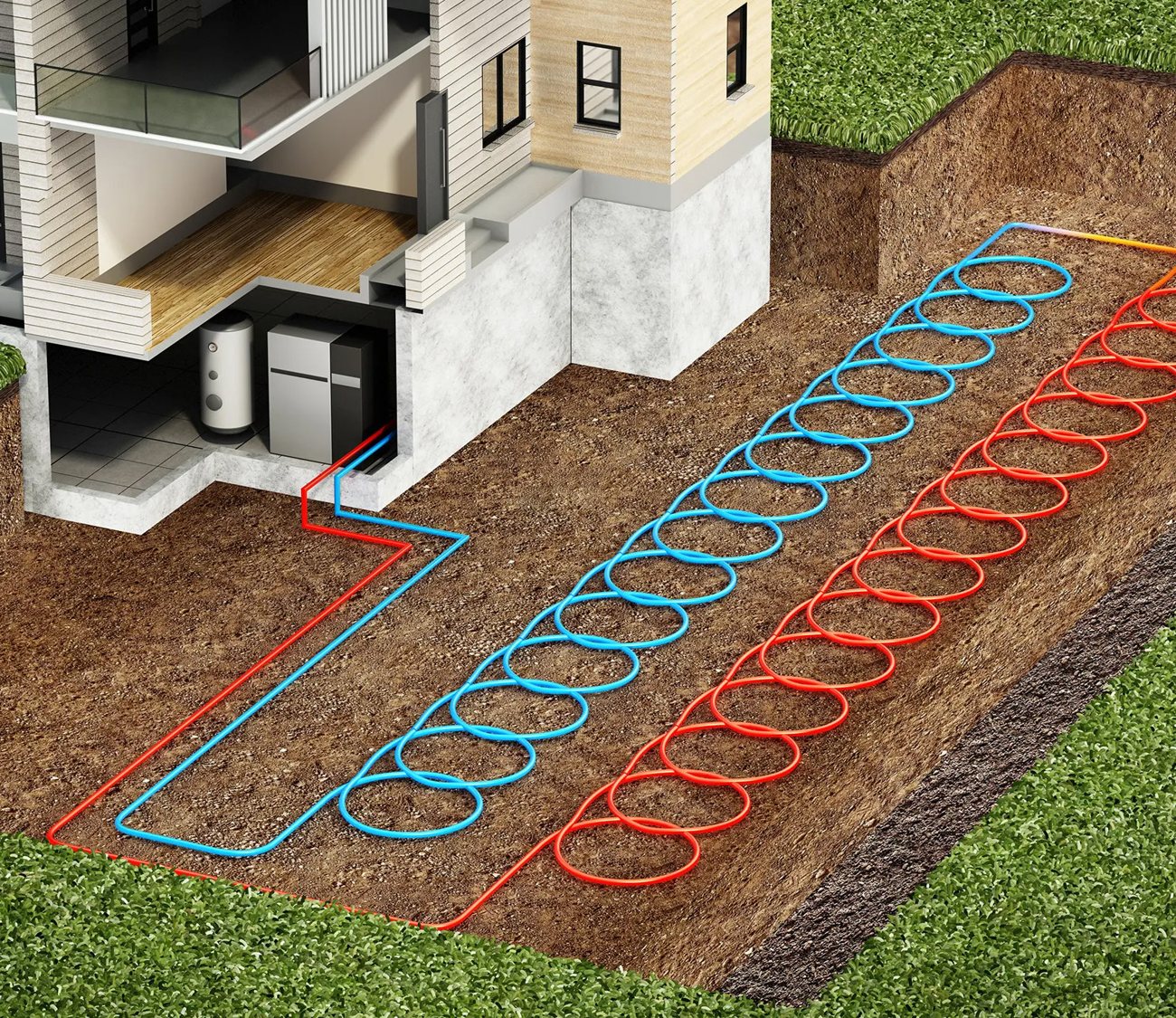
as behavioural architecture rather than as a neutral funding vessel, the paper then derives a suite of Islamic product designs suited to Q1 transition—servitised ijara structures, use-of-proceeds circular sukuk, blended musharaka and mudaraba climate-circular funds, waqf-backed and zakat-supported MSME transition facilities, and circular takaful mechanisms that underwrite durability, maintenance, and repair. These designs consolidate a prior research programme on venture waqf and equity-at-default, on blended Islamic finance for impactful enterprises, and on Islamic finance as an embedded framework for regenerative development and are tested through a worked application to geothermal (ground-source) heat pumping—a long-lived, capital-heavy asset whose deployment is constrained more by financing structure than by technology. Islamic finance is shown to be distinctively suited to this destination because of its emphasis on asset-backing, risk-sharing, and social solidarity, but the paper insists throughout that realising the potential depends on stronger taxonomies, disclosure systems, Shari’a governance, and impact reporting, which are constitutive elements of the model rather than optional accessories.
TheArgumentandItsStakes
The linear economic model remains the dominant organisational logic across most industries. Its basic pattern—extract, manufacture, sell, use, and discard—has been criticised by major policy and research institutions as environmentally and socially
Circular-ESG Business Transformation and the Design of Islamic Financial Products | Chapter 5
Global Islamic Finance Report 2026 | 98
Chapter Highlights
Figure 4.1: Cartesian Four-Quadrant Coordinate System of Business Forms for Nature and Society
High Positive Social Impact
Value Extraction (Natural Systems Depletion)
Q2 (−,+)
Linear-open Loop
Values-shifted but Nature-negative
Mission-led yet resource intensive
Strong social intent
Limited or negative natural regeneration
Q1 (+,+)
Circular Maqasid-ESG
Regenerative & Purpose-centric
Holistic maqasid alignment
Restores & regenerates nature
Creates long-term social prosperity
Q3 (−,−)
Linear-open Loop
Extractive & Value-depleting
Profit over people & planet
High extraction & pollution
Weak or exploitative models
Q4 (+,−)
Circular Closed-loop
Nature-positive but Society-negative
Environmentally efficient operations
Low social inclusion or inequitable distribution
Technically circular but socially blind
Y-SOCIETY
Natural Systems Regeneration
Value ExtractionDeplete Nature & Society
Low / Negative Social Impact
Value CreationRegenerate Nature & Elevate Society
LEGEND
ERA OF R (Restorative Era)RRefuseRRethinkRReduceRReuseRRepair / RefurbishRRemanufactureRRepurposeRRecycleRRecover
ERA OF D (Design Era)D1Design to facilitate the RsD2Design to durabilityD3Design to reduce emissions and pollutantsD4Design financial contracts to support the transitionD5Design supportive policiesD6Design supportive technologies
Nature Axis (X): From degrading to regenerating natural systemsSociety Axis (Y): From self-serving to uplifting human well-being
PURPOSE: Guide business forms from value extraction (Q3) → efficiency (Q4) → values integration (Q2) → regeneration (Q1).The future belongs to business models that regenerate Nature and elevate Society.
Note: The horizontal axis (X: Nature) runs from value extraction to natural-systems regeneration; the vertical axis (Y: Society) runs from low or negative social impact to high positive social impact. Q1 = Circular-Maqasid-ESG (regenerative and purpose-centric); Q2 = linear open-loop, values-shifted but nature-negative; Q3 = linear open-loop, extractive and value-depleting; Q4 = circular closed-loop, nature-positive but society-blind. The “Era of R” (Refuse, Rethink, Reduce, Reuse, Repair/Refurbish, Remanufacture, Repurpose, Recycle, Recover) and the “Era of D” (design strategies) summarise the operational and design levers of the regenerative quadrant.
Chapter Highlights
A Worked Application
Financing Geothermal Heat Pumping
Geothermal—or, more precisely, ground-source—heat pumping offers a near-ideal test of the framework because its difficulty is financial before it is technical. A ground-source system moves heat between a building and the stable temperature of the earth a few metres down, delivering both heating and cooling at a coefficient of performance several times that of combustion or electrical resistance, and the buried ground loop can last fifty years or more. At district scale, the University of Toronto’s King’s College Circle geoexchange—Canada’s largest urban ground-source system, comprising 372 boreholes drilled 250 metres deep and completed in 2024—provides heating and cooling to more than thirty campus buildings while avoiding roughly 15,000 tonnes of carbon dioxide equivalent each year.
unsustainable because it locks firms into continued virgin-resource extraction, rising waste, and avoidable emissions. In response, the circular economy has matured into a systems framework orientated around eliminating waste and pollution, circulating products and materials at their highest value, and regenerating natural systems. The scholarly literature treats circular business models not as end-of-pipe waste management but as mechanisms that narrow, slow, close, intensify, and dematerialise resource loops.
Running in parallel, sustainability governance has increasingly been organised through the vocabulary of ESG. That development has sharpened board-level attention to sustainability-related risks, metrics, and disclosure, especially since the issuance of IFRS S1 and IFRS S2, which require entities to disclose sustainability, climate-related risks and opportunities that could affect enterprise prospects, cash flows, access to finance, and cost of capital. Yet ESG remains an ambiguous field. Berg et al. (2022) documented substantial disagreement among the major rating providers and traced most of the divergence to measurement differences. The practical hazard is that a firm may improve one rating while neglecting broader sustainability performance and that investors may mistake disclosure sophistication for real-economy transformation.
A second and deeper limitation is that mainstream ESG architecture often privileges financially material information for capital providers. By contrast, the Global Reporting Initiative (2021a) centres an organisation’s significant impacts on the
Chapter 5 | Circular-ESG Business Transformation and the Design of Islamic Financial Products
101 | Global Islamic Finance Report 2026
economy, environment, and people, and EFRAG’s (2024) implementation guidance formalises double materiality by requiring consideration of both impact materiality and financial materiality. This distinction is decisive for circular transformation: a firm can be ESG-literate in a disclosure sense while remaining materially linear in how it designs products, sources inputs, handles waste, and shares value with labour and communities. Circular transition, therefore, demands more than compliance-minded governance; it demands restructuring the business model itself.
Maqasid al-Shari’a has been treated as a framework capable of aligning the protection of life, wealth, intellect, lineage, and religion with contemporary sustainability concerns
Islamic finance enters this conversation by a different moral and institutional route. Policy and scholarly sources consistently emphasise that it is anchored in real economic activity, risk sharing, sanctity of contract, and social justice. The World Bank and Islamic Financial Services Board note that Islamic finance strengthens the link between finance and the real economy through asset-backing and risk sharing, while the IFSB (2020) explains that the tradition weighs both individual and societal
Circular-ESG Business Transformation and the Design of Islamic Financial Products | Chapter 5
Global Islamic Finance Report 2026 | 102
interests and that solidarity instruments—waqf, sadaqa, and qard—can be mobilised for inclusion and poverty alleviation. In recent scholarship on sustainable takaful and Islamic corporate sustainability, maqasid al-Shari’a has been treated as a framework capable of aligning the protection of life, wealth, intellect, lineage, and religion with contemporary sustainability concerns. These strands now matter in market practice. The global Islamic financial services industry reached US$3.38 trillion in assets in 2023. At the same time, the World Bank and Islamic Development Bank report that Islamic climate finance remains constrained by fragmented governance frameworks, the absence of a common taxonomy, limited human capability, thin project pipelines, and weak data infrastructure, even as Islamic banks, sustainable sukuk, and halal value chains increasingly engage with sustainability strategies. The market, in short, is now large enough to matter but not yet institutionally mature enough to finance transition at scale.
The inquiry also builds on a sustained research programme that has, over the past decade, argued for exactly this kind of paradigm shift from within Islamic economics. Earlier work reconceived the waqf as an incorporated venture institution whose purpose is to make impactful, zero-waste halal enterprises successful and introduced equity-at-default as a compassionate contract that replaces collateral and foreclosure with partnership. Subsequent work engineered blended Islamic structures that mobilise social and commercial capital jointly for impactful small and medium enterprises pursuing the Sustainable
Chapter 5 | Circular-ESG Business Transformation and the Design of Islamic Financial Products
103 | Global Islamic Finance Report 2026
Development Goals, and more recent work has framed Islamic economics and finance itself as an embedded framework for regenerative development aligned with maqasid al-Shari’a. The present paper consolidates these threads into a single coordinate logic and extends them from individual instruments toward a general account of regenerative business transformation. This paper develops its case thematically rather than through the conventional empirical sequence because the question at hand cannot be answered from any one piece of literature in isolation; it requires an integrative synthesis of circular-economy theory, sustainability-disclosure standards, Islamic governance standards, and market-structuring guidance. The argument proceeds in five movements. It first reconstructs the coordinate system as the analytical spine of the inquiry. It then reads the four quadrants as archetypes of the firm, devoting sustained attention to the linear, linear-ESG, circular, and circular-ESG forms.
It next establishes the design imperative—the claim that contract form is itself behavioural architecture—and from that imperative derives a family of Islamic financial products fitted to the regenerative quadrant. It closes by specifying the measurement, governance, and policy conditions without which the model cannot be credible. The contribution is to connect circular business-model theory, disclosure materiality, and Islamic contract design into one integrated logic rather than three separate conversations.
Circular-ESG Business Transformation and the Design of Islamic Financial Products | Chapter 5
Global Islamic Finance Report 2026 | 104
ACoordinateSystemofCompetingBusinessForms
The organising device of this paper is a Cartesian coordinate system that captures, in a single visual grammar, four competing business forms across two directional tensions (Figure 1). The horizontal axis measures the treatment of Nature, running from value extraction and the depletion of natural systems on the left toward their restoration and regeneration on the right. The vertical axis measures the treatment of Society, running from self-serving conduct and low or negative social impact at the bottom toward the uplifting of human well-being at the top. Read this way, the rightward and upward movements are not static labels but strategic transition vectors: the right captures movement from extractive or weakly restorative activity toward circular and regenerative relations with ecological systems, and the upper region captures movement from narrow profit maximisation toward stronger social value, governance, and stakeholder obligation.
Two features of the figure deserve emphasis before the quadrants are examined individually. The first is that the axes are non-substitutable. A gain on the Nature axis does not license a loss on the Society axis, and vice versa; the plane refuses the compensatory logic by which strong performance in one domain is allowed to offset weakness in another. The diagram’s value lies precisely in keeping the two tensions visible at once so that a firm cannot purchase ecological credit with social
Chapter 5 | Circular-ESG Business Transformation and the Design of Islamic Financial Products
105 | Global Islamic Finance Report 2026
neglect or social credit with ecological harm. This refusal has deep roots in the Islamic principle of mizan—the balance set within creation that human conduct is enjoined not to transgress—which has long been read as an injunction against ecological and social imbalance alike. Non-substitutability is, in this sense, not merely an analytical convenience but a normative commitment. The second feature is more easily overlooked.
The token placed at the extractive origin of the lower-left quadrant—short-term profit, the economy reduced to throughput— reveals that the Economy is itself a third object that can be either depleted or regenerated. Although the plane is drawn with two axes, it therefore encodes a threefold claim about regeneration: of Nature, of Society, and of the Economy as a self-renewing rather than self-consuming system. That third regeneration becomes explicit only in the upper-right quadrant, and it is the conceptual heart of this paper.
FourArchetypesoftheFirm
The coordinate system becomes analytically powerful when each quadrant is read as a coherent archetype—a distinct way of organising value proposition, value creation, value delivery, and value capture—rather than as a mere quadrant label. There are at least four qualitatively different ways for a firm to respond to sustainability pressure, and the differences among them are differences of architecture, not of degree.
Circular-ESG Business Transformation and the Design of Islamic Financial Products | Chapter 5
Global Islamic Finance Report 2026 | 106
The Linear, Open-loop Firm (Q3)
The lower-left quadrant represents the linear, open-loop firm in its purest form: business-as-usual extraction, profit-centred and value-depleting. Here economic value remains detached from ecological regeneration and only weakly connected to social welfare. The firm’s posture corresponds closely to the European Commission’s (2023) critique of the take-make-use-dispose model and to the OECD’s (2019) characterisation of the traditional linear system of extraction, ownership, and disposal. Its performance depends on throughput and ownership transfer; profit is realised at the point of sale, and end-of-life responsibility is externalised onto customers, communities, and ecosystems. The defining traits of this archetype are the prioritisation of short-term profit over people and planet, high extraction and pollution intensity, and weak or frankly exploitative treatment of labour and community. In coordinate terms, it sits at the negative pole of both axes—depleting Nature while doing little for Society—and it is the historical default from which every other archetype represents an attempted departure. Crucially, the linear firm is not irrational; within a price system that does not charge for waste, durability, or social harm, linearity is locally optimal. That observation matters because it implies that moving a firm out of Q3 will require changing the incentives it faces, not merely exhorting it to behave better.
Chapter 5 | Circular-ESG Business Transformation and the Design of Islamic Financial Products
107 | Global Islamic Finance Report 2026
Figure 4.1: Cartesian Four-Quadrant Coordinate System of Business Forms for Nature and Society
High Positive Social Impact
Value Extraction (Natural Systems Depletion)
Q2 (−,+)
Linear-open Loop
Values-shifted but Nature-negative
Mission-led yet resource intensive
Strong social intent
Limited or negative natural regeneration
Q1 (+,+)
Circular Maqasid-ESG
Regenerative & Purpose-centric
Holistic maqasid alignment
Restores & regenerates nature
Creates long-term social prosperity
Q3 (−,−)
Linear-open Loop
Extractive & Value-depleting
Profit over people & planet
High extraction & pollution
Weak or exploitative models
Q4 (+,−)
Circular Closed-loop
Nature-positive but Society-negative
Environmentally efficient operations
Low social inclusion or inequitable distribution
Technically circular but socially blind
Y-SOCIETY
Natural Systems Regeneration
Value ExtractionDeplete Nature & Society
Low / Negative Social Impact
Value CreationRegenerate Nature & Elevate Society
LEGEND
ERA OF R (Restorative Era)RRefuseRRethinkRReduceRReuseRRepair / RefurbishRRemanufactureRRepurposeRRecycleRRecover
ERA OF D (Design Era)D1Design to facilitate the RsD2Design to durabilityD3Design to reduce emissions and pollutantsD4Design financial contracts to support the transitionD5Design supportive policiesD6Design supportive technologies
Nature Axis (X): From degrading to regenerating natural systemsSociety Axis (Y): From self-serving to uplifting human well-being
PURPOSE: Guide business forms from value extraction (Q3) → efficiency (Q4) → values integration (Q2) → regeneration (Q1).The future belongs to business models that regenerate Nature and elevate Society.
Note: The horizontal axis (X: Nature) runs from value extraction to natural-systems regeneration; the vertical axis (Y: Society) runs from low or negative social impact to high positive social impact. Q1 = Circular-Maqasid-ESG (regenerative and purpose-centric); Q2 = linear open-loop, values-shifted but nature-negative; Q3 = linear open-loop, extractive and value-depleting; Q4 = circular closed-loop, nature-positive but society-blind. The “Era of R” (Refuse, Rethink, Reduce, Reuse, Repair/Refurbish, Remanufacture, Repurpose, Recycle, Recover) and the “Era of D” (design strategies) summarise the operational and design levers of the regenerative quadrant.
The Linear-ESG Firm (Q2)
The upper-left quadrant is the most seductive and the most
Circular-ESG Business Transformation and the Design of Islamic Financial Products | Chapter 5
Global Islamic Finance Report 2026 | 108
easily misread. It is the linear-ESG firm: values-shifted but still nature-negative, mission-led yet resource-intensive. This is an important intermediate form because it demonstrates that a firm can improve its governance, ratings, disclosure, and stakeholder language without fundamentally redesigning its products, supply chains, or ownership logic. Such firms adopt sustainability reports, climate disclosures, and board-level oversight; they cultivate social purpose, ethical engagement, and governance excellence; and they may, thereby, satisfy genuine investor and regulatory demands. IFRS S1 and S2 materially strengthen the discipline of governance, strategy, risk management, and target-setting that these firms can credibly demonstrate (IFRS Foundation, 2023a, 2023b).
A firm can improve its governance, ratings, disclosure, and stakeholder language without fundamentally redesigning its products, supply chains, or ownership logic by adopting sustainability reports, climate disclosures and board-level oversight
Yet the quadrant remains open-loop because none of this necessarily alters the material metabolism of the business. A
Chapter 5 | Circular-ESG Business Transformation and the Design of Islamic Financial Products
109 | Global Islamic Finance Report 2026
company can produce sophisticated, financially material ESG disclosures while continuing to rely on planned obsolescence, low reparability, minimal take-back, and virgin-material intensity. The evidence on rating divergence deepens the concern: because ESG measurement is itself noisy and contested, a firm can improve its position on one rater’s scale while leaving its real-economy footprint substantially untouched. The danger of Q2, then, is not that it is dishonest but that it is a plateau—a place where “more ESG” can be added indefinitely without the loop ever closing.
Recognising Q2 as a distinct archetype guards against the most common error in sustainable-finance practice: treating improved disclosure as if it were structural transformation. This caution applies with particular force to Islamic finance, and it is the one that the tradition’s own critics have pressed. Because the linear paradigm has been so dominant, Islamic finance and the broader halal economy have largely operated as a permissible subset of the extractive model rather than as an alternative to it, reproducing its throughput logic in Shari’a-compliant forM. Halal status, on this view, is necessary but not sufficient to make a business socially responsible or regenerative (Khan & Badjie, 2022). A firm may therefore be simultaneously Shari’a-compliant, ESG-disclosing, and squarely lodged in Q2—values-shifted in its language while linear in its metabolism. This is the sharpest warning the coordinate system issues to Islamic sustainable finance: compliance and disclosure together can still leave the loop open.
Circular-ESG Business Transformation and the Design of Islamic Financial Products | Chapter 5
Global Islamic Finance Report 2026 | 110
The Circular, Closed-Loop Firm (Q4)
The lower-right quadrant is operationally transformative in a way the left-hand quadrants are not. The circular, closed-loop firm redesigns products and asset flows around circular logic: it is nature-positive, but, as the figure warns, it can be technically circular yet socially blind. The circular-economy literature describes the relevant mechanisms in complementary terms. Bocken et al. (2016) distinguishes slowing, closing, and narrowing resource loops; Geissdoerfer et al. (2020) extends this with intensifying and dematerialising loops; and the OECD (2019) identifies circular supply, resource recovery, product life extension, sharing models, and product-service systems as the headline circular business models. The Q4 firm puts these into practice: it redesigns supply chains, extends product life through eco-efficient design, recovers value at end of use, and depollutes and restores natural systems where it can.
What this archetype does not guarantee is a comprehensive social logic. The figure is careful to label Q4 as nature-positive but society-negative, with low social inclusion or inequitable distribution as its characteristic shortfall, and the empirical literature supplies the corresponding caution: the OECD (2019) explicitly warns that circular models, though broadly favourable on life-cycle environmental grounds, can generate rebound effects and unintended consequences if they are not assessed systemically. A firm can close its material loops and still concentrate the resulting gains, displace labour, or deepen inequality. Circularity is thus a necessary advance over linearity, but it is
Chapter 5 | Circular-ESG Business Transformation and the Design of Islamic Financial Products
111 | Global Islamic Finance Report 2026
not, by itself, regeneration. It solves the Nature axis while leaving the Society axis unaddressed.
The Circular-Maqasid-ESG Firm (Q1): Regenerative Sustainability
The upper-right quadrant is the conceptual destination of this paper, and it is emphatically not a synonym for recycling or for sustainability reporting. It is a higher-order synthesis, and it is best defined directly.
Circularity is thus a necessary advance over linearity, but it is not, by itself, regeneration. It solves the Nature axis while leaving the Society axis unaddressed
Q1 Regenerative Sustainability is defined here as the condition in which a business form achieves the simultaneous and mutually non-substitutable regeneration of three domains at once—Nature, Society, and the Economy—so that progress in any one is achieved without sacrificing the others and ideally reinforces them.
Each of the three regenerations has a distinct content. The regeneration of Nature is carried out operationally by what the
Circular-ESG Business Transformation and the Design of Islamic Financial Products | Chapter 5
Global Islamic Finance Report 2026 | 112
figure calls the Era of R—refuse, rethink, reduce, reuse, repair, refurbish, remanufacture, repurpose, recycle, and recover— whose cumulative effect is to restore rather than deplete natural systems. The regeneration of Society is carried by maqasid al-Shari’a, which orients the firm toward the protection of life, intellect, lineage, wealth, religion and toward long-term social prosperity and inclusion rather than narrow shareholder return; read together with the Sustainable Development Goals and the pillars of sustainable human development, with which the maqasid substantially converge. The regeneration of the Economy is the most distinctive and the most easily missed: it requires that the financial and contractual layer be redesigned so that value capture rewards durability, maintenance, and recovery rather than throughput so that the economy becomes a self-renewing system rather than a self-consuming one.
It is in this third regeneration that Islamic contract design does its decisive work, and it is the reason the regenerative quadrant cannot be reached by environmental engineering alone. This is the sense in which Islamic economics and finance can serve as an embedded framework for regenerative development rather than as an external overlay on a linear economy: the contractual layer is where regeneration is either secured or lost. Earlier work renders the financial markers of that regeneration concrete, extending the circular economy’s zero-waste and zero-emissions targets with two distinctively financial zeros—zero-interest and zero-foreclosures—so that the economy ceases to extract rent and ceases to liquidate enterprises in distress.
Chapter 5 | Circular-ESG Business Transformation and the Design of Islamic Financial Products
113 | Global Islamic Finance Report 2026
Seen in these terms, the three contributing disciplines occupy complementary places within Q1. Circularity governs the flow of resources and products. ESG contributes structured disclosure, board process, risk management, and capital-market visibility. Maqasid al-Shari’a supplies a thicker moral compass and a tighter fit between finance and the real economy. The empirical literature supports the coherence of this synthesis: the sustainable-takaful scholarship finds substantial convergence between ESG principles and maqasid, while cross-country evidence on Islamic banks indicates that stronger Shari’a governance improves social and governance performance even where environmental performance still lags. The upper-right quadrant should therefore be understood as the form in which circular design and Shari’a-informed governance jointly cure the “thinness” of both disclosure-led ESG and technically narrow circularity—the form in which the firm is at once materially circular and normatively accountable to Nature, Society, and the Economy.
The figure’s “Era of D” makes a final, practical point about how Q1 is reached. Regeneration depends repeatedly on design—design for the Rs, for durability, for reduced emissions, for financial contracts that support the transition, and for the supportive policies and technologies that surround it. European circular-economy policy now places durability, reparability, the right to repair, digital product information, and sustainable product design at the centre of transition strategy, and the business-model literature has long insisted that product design and
Circular-ESG Business Transformation and the Design of Islamic Financial Products | Chapter 5
Global Islamic Finance Report 2026 | 114
business-model design must move together if firms are to slow and close their loops. The implication for finance is direct and is taken up next: products meant to support circular transformation must themselves be designed around asset longevity, maintainability, recoverability, and traceability, or financing will remain misaligned with the very transition it claims to serve.
The transition from the left-hand quadrants to Q1 turns on a claim that is easy to state and consequential to accept: contract form is behavioural architecture. Islamic financial products are not neutral funding vessels whose only function is to move capital; they are governance technologies that shape conduct. A debt-like instrument that rewards volume tends to entrench throughput and short-term disposal, pulling even a well-intentioned firm back toward Q3. An ownership, leasing, or impact-linked structure, by contrast, can create standing incentives for maintenance, longer asset life, take-back, and better stakeholder treatment. This is why the same firm can behave linearly or regeneratively depending on how it is financed and why financing design is not downstream of business transformation but part of it.
Islamic finance offers a striking illustration of the same dynamic in reverse. A whole family of contracts that were originally
Chapter 5 | Circular-ESG Business Transformation and the Design of Islamic Financial Products
115 | Global Islamic Finance Report 2026
compassionate—qard, kafala, daman, takaful, hawalat al-dayn, and tawarruq among them—has gradually been commercialised under the pressure of the linear paradigm, their solidarity function left dormant inside instruments now optimised for volume. Reaching Q1 partly means reactivating that dormant function: designing contracts that once again behave as institutions of compassion rather than as throughput machinery. This assumption is consistent with two bodies of literatures at once. Circular business-model scholarship insists that value capture must be aligned with the intended pattern of value creation and delivery, or the model will not hold. Islamic finance scholarship stresses Shari’a governance, real-economy linkage, and social solidarity as the structuring principles of intermediation. Where the two literatures meet, the conclusion is the same: if a financier wishes to reward durability and recovery, it must use instruments whose returns are tied to durability and recovery rather than to sales volume.
Islamic financial products are not neutral funding vessels whose only function is to move capital; they are governance technologies that shape conduct
Reaching Q1 also requires a different view of materiality than
Circular-ESG Business Transformation and the Design of Islamic Financial Products | Chapter 5
Global Islamic Finance Report 2026 | 116
the one that governs the linear-ESG quadrant. IFRS S1 and S2 focus on the sustainability- and climate-related risks and opportunities that are reasonably expected to affect enterprise prospects; the Global Reporting Initiative (2021a, 2021b) instead centres the firm’s significant impacts on the economy, environment, and people; and EFRAG’s (2024) double-materiality framework explicitly combines impact materiality and financial materiality and ties both to the value chain.
For a regenerative business form, the double view is decisive. A repair network, a reverse-logistics system, or a waqf-funded water project may matter because it protects communities or ecosystems well before its effect crystallises as a short-term enterprise financial metric. In Islamic finance, this wider lens is not an imported novelty; it is consonant with maqasid and with the IFSB’s (2020) emphasis on social solidarity and inclusion. Materiality, properly understood, is therefore the bridge between the disclosure machinery of ESG and the regenerative ambition of Q1.
From the design imperative, five Islamic financial product families emerge as especially well-suited to financing the move into Q1. Each is presented not as an instrument already dominant in the market but as a design archetype derived from the capabilities and barriers documented in the reviewed literature. Each
Chapter 5 | Circular-ESG Business Transformation and the Design of Islamic Financial Products
117 | Global Islamic Finance Report 2026
also draws on the reservoir of Islamic solidarity instruments—the institutions of compassion—whose regenerative potential can be deliberately re-engineered into modern product form.
The Servitised Ijara Transition Facility
Product-service-system research shows that circular firms frequently create value by providing access and performance rather than by transferring full ownership, and a Shari’a-compliant leasing architecture is unusually well matched to this logic. Under ijara, a financier or special-purpose vehicle can retain ownership of durable assets while the user pays for use, performance, or output. When that structure is combined with maintenance covenants, upgrade clauses, take-back requirements, and residual value planning, ijara can finance fleets, manufacturing equipment, water and cooling systems, or agricultural technologies in ways that reward long asset life rather than rapid turnover. The mechanism is powerful precisely because ownership retention gives the financier a direct stake in designing for repair, refurbishment, and eventual recovery; the instrument fits both product-life-extension and product-service-system models, and it converts the financier from a seller of throughput into a steward of asset longevity.
The Use-of-Proceeds Circular Sukuk
Joint guidance from ICMA, the Islamic Development Bank, and the London Stock Exchange Group makes clear that sustainable-sukuk practice largely follows the architecture of sustainable
Circular-ESG Business Transformation and the Design of Islamic Financial Products | Chapter 5
Global Islamic Finance Report 2026 | 118
bonds: a public framework aligned to use of proceeds, project evaluation and selection, management of proceeds, and reporting, supported by second-party opinions and post-issuance tracking. The market already recognises circular-economy categories as eligible use-of-proceeds areas, alongside eco-efficient products and production technologies, pollution prevention, renewable energy, water, and biodiversity. A circular sukuk could therefore fund repair hubs, remanufacturing ecosystems, industrial-symbiosis parks, reverse-logistics systems, secondary-material platforms, sustainable buildings, clean transport, or waste-to-value infrastructure. The WB-IsDB (2025) report documents growing issuance and continued oversubscription in the green-sukuk market while noting the need for more diversified pipelines and more innovative structures—precisely the room into which a circular sukuk is designed to move.
Product-service-system research shows that circular firms frequently create value by providing access and performance rather than by transferring full ownership, and a Shari’a-compliant leasing architecture is unusually well matched to this logic
Chapter 5 | Circular-ESG Business Transformation and the Design of Islamic Financial Products
119 | Global Islamic Finance Report 2026
The Blended Musharaka or Mudaraba Climate-circular Innovation Fund
Many circular business models need patient risk capital at the experimentation stage—repair platforms, circular materials science, refill systems, modular hardware, industrial-symbiosis software, and climate-resilient halal value chains seldom fit collateral-heavy lending. Here the risk-sharing instruments of Islamic finance comes into their own. The WB-IsDB (2025) report argues that Islamic finance has a strong opportunity to deploy mudaraba and musharaka for private-equity and venture-capital roles in climate innovation, and it presents a blended musharaka-sukuk model in which concessional and commercial capital are combined. A blended fund of this kind can absorb early-stage uncertainty while maintaining real-sector linkage and shared upside, which is exactly the financing profile that the formation of the upper-right quadrant requires and that conventional debt struggles to provide.
The structuring logic for such a fund has already been worked out in detail. Blended Islamic finance brings three motivations into deliberate alignment—philanthropic compassion, commercial profit, and public-sector facilitation— around a consensus set of impact criteria for the enterprises it backs: the 4 Zeros and Service to Society, namely, zero-waste, zero-emissions, zero-interest, zero-foreclosures, and demonstrable benefit to the community. In the resulting structures, such as a blended murabaha or a blended murabaha line of credit, the commercial financier supplies the principal, a philanthropic or
Circular-ESG Business Transformation and the Design of Islamic Financial Products | Chapter 5
Global Islamic Finance Report 2026 | 120
social-fund tranche underwrites the cost of funds, and the public sector facilitates so that the impactful enterprise receives subsidised or effectively interest-free financing while each party’s motive is satisfied. Islamic social funds—zakat, waqf, and sadaqa—can be layered as first-loss, subordinate, or guarantee (kafala) capital that de-risks commercial money, which is precisely the blended-finance architecture, in Shari’a-compliant form, that the WB-IsDB (2025) report now calls for.
The Waqf-Supported, Zakat-Enabled MSME Transition Facility
The regenerative quadrant cannot be reached by large firms alone; micro, small, and medium enterprises must transition too, and they are typically the businesses most likely to fall between commercial-bank requirements and public-funding gaps. The IFSB (2020) notes that waqf, sadaqa, and qard can be integrated with Islamic financial products to serve inclusion objectives, and the WB-IsDB (2025) report shows that in Indonesia and Malaysia, zakat and waqf already help halal-industry SMEs obtain certification and adopt sustainable practices, even as a lack of financial resources and low ESG technical capability remain major barriers. A Circular-Maqasid-ESG facility for MSMEs could therefore use a layered structure in which waqf or philanthropic first-loss capital de-risks a commercial financing pool, while qard or concessional tranches fund audits, product redesign, cleaner equipment, water efficiency, repair tooling, or transition certification. Existing cash-waqf models for
Chapter 5 | Circular-ESG Business Transformation and the Design of Islamic Financial Products
121 | Global Islamic Finance Report 2026
sustainable infrastructure and community development demonstrate that such layering is feasible rather than merely aspirational. A more ambitious version of the same idea reconceives the waqf itself.
A venture waqf is an incorporated endowment whose defining purpose is not general charity but making impactful, zero-waste halal enterprises successful and then exiting to recycle its support to the next cohort. Its signature instrument is equity-at-default: an interest-free loan or other Islamic debt contract that converts into a declining equity partnership if the enterprise defaults, rather than being secured by collateral and terminated by foreclosure. The financier thereby becomes a patient partner in distress instead of a liquidator, replacing the two foundational pillars of conventional lending—collateral at entry and foreclosure at exit—with compassion and shared ownership. For circular MSMEs, whose unconventional assets and longer payback periods make them precisely the borrowers that collateral-and-foreclosure lending rations out, equity-at-default removes the structural barrier directly and aligns the financier’s incentive with the survival of the enterprise rather than with the seizure of its assets.
Circular Takaful and Performance-Guarantee Protection
The sustainable-takaful literature shows that ESG and maqasid can be integrated into takaful through a disclosure-and-governance blueprint. Extending that logic, takaful should not merely insure against conventional risks; it can be designed to lower
Circular-ESG Business Transformation and the Design of Islamic Financial Products | Chapter 5
Global Islamic Finance Report 2026 | 122
the cost of circular operating models. One of the hidden barriers to repair, refurbishment, modular design, and reused-equipment systems is perceived performance uncertainty. Takaful can underwrite asset uptime, remanufactured-component performance, repair liability, or maintenance-contract fulfilment, and its underwriting criteria can be set to reward durability, traceability, training, occupational safety, and low-emission operation. So designed, takaful ceases to be a protective overlay and becomes an incentive mechanism for the regenerative quadrant—a way of pricing the reliability of circular systems so that they can compete with linear ones.
AWorkedApplication:FinancingGeothermalHeatPumping
Geothermal—or, more precisely, ground-source—heat pumping offers a near-ideal test of the framework because its difficulty is financial before it is technical. A ground-source system moves heat between a building and the stable temperature of the earth a few metres down, delivering both heating and cooling at a coefficient of performance several times that of combustion or electrical resistance, and the buried ground loop can last fifty years or more. At district scale, the University of Toronto’s King’s College Circle geoexchange—Canada’s largest urban ground-source system, comprising 372 boreholes drilled 250 metres deep and completed in 2024—provides heating and cooling to more than thirty campus buildings while avoiding roughly 15,000 tonnes of carbon dioxide equivalent each year. At the
Chapter 5 | Circular-ESG Business Transformation and the Design of Islamic Financial Products
123 | Global Islamic Finance Report 2026
residential scale, the Government of Ontario’s Home Renovation Savings Program, delivered through Save on Energy and Enbridge Gas, offers homeowners rebates of up to CAD 12,000 toward a ground-source (geothermal) heat pump, materially offsetting the front-loaded drilling cost that otherwise keeps the technology out of reach. Yet the asset is capital-heavy and front-loaded: most of its cost is drilling and excavation, incurred at the outset, while its value accrues slowly as avoided energy over decades. That profile is exactly the one that throughput-rewarding, collateral-and-foreclosure lending under-serves.
Geothermal heat pumping is therefore not merely an eligible green project; it is a worked case for whether Islamic contract design can carry a regenerative asset from aspiration to deployment. Efficiency alone places geothermal in Q4. A luxury villa or a commercial tower that sinks a borehole field becomes nature-positive—lower emissions, lower running cost—without necessarily widening access or touching the social axis; deployed only where capital is already abundant, it is technically circular and socially blind. The same asset class reaches Q1 only when the financing structure carries it there: when blended or waqf-backed arrangements extend it to households, mosques, schools, and small enterprises that the collateral system rations out, and when the contract rewards the fifty-year life of the loop rather than the next equipment sale. Two cautions from the framework apply directly. The system is an energy-regeneration case rather than a material-loop-closing one; it belongs to the
Circular-ESG Business Transformation and the Design of Islamic Financial Products | Chapter 5
Global Islamic Finance Report 2026 | 124
regeneration of Nature through eco-efficient operation, not through narrowing material loops, and it should be described as such. And the rebound warning holds: cheaper comfort can induce additional consumption, so efficiency gains must be assessed at the level of the whole system rather than the single building.
Geothermal heat pumping is therefore not merely an eligible green project; it is a worked case for whether Islamic contract design can carry a regenerative asset from aspiration to deployment
Mapped against the five product families, geothermal assigns itself with unusual clarity. The servitised ijara facility is its natural primary structure. Because the ground loop is a long-lived asset whose entire value is its durability, a financier can retain ownership and charge for delivered heating and cooling—comfort as a service—rather than selling equipment outright. The building avoids the upfront drilling cost, while the financier, as owner, has every incentive to design for the fifty-year life, maintain the field, and recover residual value. An istisna’ contract can sit ahead of the ijara to fund the custom drilling and installation, with the financier commissioning the borehole field
Chapter 5 | Circular-ESG Business Transformation and the Design of Islamic Financial Products
125 | Global Islamic Finance Report 2026
under a construction contract and then leasing the completed system—the standard project-finance pairing for assets that must be built before they can be used.
The use-of-proceeds circular sukuk is the instrument of scale. A district system is precisely the kind of ring-fenced, asset-backed cash flow that an ijara sukuk securitises. The University of Toronto’s King’s College Circle geoexchange, completed in 2024 with 372 boreholes drilled 250 metres deep to heat and cool more than thirty campus buildings and to cut on the order of 15,000 tonnes of carbon dioxide equivalent a year, is one such network. A GCC campus or villa-cluster system would present the same financeable profile. Geothermal falls squarely within the renewable-energy and efficiency categories already recognised as eligible use of proceeds in sustainable-sukuk practice, so the second-party opinion and impact-reporting machinery transfers without modification. It is the blended and waqf-based structures, however, that close the access gap and decide whether the technology ever leaves Q4. The barrier to household and small-enterprise geothermal is the front-loaded drilling cost set against a long payback. A blended structure in which a philanthropic or social-fund tranche underwrites the cost of funds turns an unbankable retrofit bankable, and equity-at-default removes the foreclosure cliff that makes lenders wary of borrowers whose principal asset is buried in the ground.
A venture waqf could itself own borehole fields serving lower-income neighbourhoods, schools, or mosques, leasing comfort at cost and recycling its capital to the next site—precisely the
Circular-ESG Business Transformation and the Design of Islamic Financial Products | Chapter 5
Global Islamic Finance Report 2026 | 126
move that lifts geothermal out of premium-villa Q4 into community Q1. Circular takaful then underwrites the residual technical uncertainty that unsettles both lenders and owners: borehole-field performance, heat-pump uptime, and the long-term ground-temperature drift that can erode efficiency in heavily cooling-dominated fields when a loop is undersized or thermally unbalanced. By pricing that risk— and by rewarding the thermal-response testing and proper sizing that prevents it—takaful lets a fifty-year asset compete on level terms with a five-year air conditioner.
The case is strongest in the GCC, where the framework’s host context and the technology’s advantage coincide. Air conditioning consumes on the order of seventy per cent of electricity in Saudi Arabia, and air-source units perform worst exactly when demand peaks, in air approaching 50°C, whereas the stable, cooler ground offers a far better heat sink. Peer-reviewed simulation for Riyadh finds ground-source systems delivering a higher coefficient of performance than air-source equivalents—about 4.1 against 3.8—with roughly a third lower annual energy use, against an eleven-year payback. That payback profile is itself the argument for patient, risk-sharing, socially subsidised Islamic capital rather than short-tenor commercial debt. Read through the coordinate system, geothermal heat pumping regenerates all three domains at once: Nature, through avoided combustion; the Economy, through an asset stewarded across half a century rather than churned; and Society—but only if the financing is deliberately designed to carry the technology
Chapter 5 | Circular-ESG Business Transformation and the Design of Islamic Financial Products
127 | Global Islamic Finance Report 2026
beyond those who could already afford it. That conditional is the whole point of the framework.
Product innovation is insufficient unless it is embedded in transparent governance and credible impact reporting; otherwise the new instruments will simply reproduce the labelling problems of the linear-ESG quadrant in Islamic dress. The reporting standards point consistently in the same direction. ICMA guidance recommends annual allocation and impact reporting together with external review; the IFRS and EFRAG systems require disclosure of governance, strategy, risk management, and metrics; the Global Reporting Initiative (2021b) emphasises significant impacts on people and the environment; and the WB-IsDB (2025) report calls for a standardised Islamic climate-finance dashboard that tracks not only financing volume but actual ESG performance and measurable mitigation and adaptation outcomes.
Taken together, these sources imply that a Circular-Maqasid-ESG product should carry at least four layers of measurement. Financial resilience covers cash-flow stability, movement in the cost of capital, and default or recovery outcomes. Circularity performance covers asset life extension, take-back rates, reuse and remanufacture volumes, recycled content, avoided waste, and resource productivity. Maqasid or social performance
Circular-ESG Business Transformation and the Design of Islamic Financial Products | Chapter 5
Global Islamic Finance Report 2026 | 128
covers the inclusion of SMEs, affordability, job quality, worker safety, access to clean water and energy, and broader community benefit. Governance assurance covers Shari’a review, use-of-proceeds controls, impact assurance, and external second-party opinion or audit. These four layers correspond, not coincidentally, to the three regenerations defined earlier—of Economy, Nature, and Society— and held together by an assurance layer that keeps the other three honest.
Governance carries a particular burden here. The evidence that stronger Shari’a governance improves social and governance performance in Islamic banks without yet consistently improving environmental outcomes (is significant because it implies that governance quality alone is not enough: environmental performance depends on whether governance is actually attached to operational and contractual redesign. In practice, Shari’a boards, compliance functions, and internal Shari’a-audit processes should widen their attention from the permissibility of transaction form to the substance of transition design, treating durability, fair risk allocation, transparency of use of proceeds, and measurable public benefit as governance questions rather than peripheral sustainability topics. AAOIFI’s (2025) expanding governance architecture provides an institutional basis for that move.
Chapter 5 | Circular-ESG Business Transformation and the Design of Islamic Financial Products
129 | Global Islamic Finance Report 2026
The practical implication for Islamic-finance jurisdictions is that circular product design and financial product design must be co-developed by ministries, standard setters, rating agencies, Shari’a boards, development banks, and industry associations working in concert
The policy conditions are equally demanding because regenerative products cannot scale in a vacuum. The WB-IsDB (2025) report recommends sector decarbonisation standards, taxonomies aligned with national policy and global standards, public-private pilot financing schemes, knowledge hubs, and centralised dashboards. European circular-economy policy offers parallel lessons on durability, reparability, digital product information, and the right to repair. These developments matter to finance because they reduce uncertainty over what counts as credible circularity, how assets should be tracked, and where performance data should come from. The practical implication for Islamic-finance jurisdictions is that circular product design and financial product design must be co-developed by ministries, standard setters, rating agencies, Shari’a boards, development banks, and industry associations working in concert. Four risks qualify the argument without overturning it.
Circular-ESG Business Transformation and the Design of Islamic Financial Products | Chapter 5
Global Islamic Finance Report 2026 | 130
Rebound effects mean that the savings from circular models can trigger additional consumption elsewhere, partially offsetting environmental gains. Measurement instability means that ESG ratings remain noisy and that divergence can distort incentives or license selective disclosure. Standard fragmentation means that the absence of common taxonomies and uneven capacity across jurisdictions continues to impede Islamic climate finance.
Moreover, substantive dilution means that a product can be labelled green, social, or Shari’a-compliant without demonstrably moving a firm toward durability, reparability, recovery, inclusion, or regeneration. These hazards do not invalidate the framework; they establish that governance and measurement are constitutive elements of the regenerative model rather than optional accessories. The argument carries its own limitations honestly. It is conceptual and design-oriented rather than empirical, and so it does not test the financial performance or risk characteristics of the proposed product families.
It draws on a literature that is stronger for sustainable sukuk and climate finance than for some other circular categories, particularly maintenance-linked Islamic finance and circular takaful. Because Islamic-finance jurisdictions differ in legal enforcement, tax treatment, governance centralisation, and disclosure maturity, the proposals here should be treated as adaptable archetypes rather than one-size-fits-all blueprints. Conceptual design work is nonetheless valuable at this stage because the literature itself repeatedly identifies the need for
Chapter 5 | Circular-ESG Business Transformation and the Design of Islamic Financial Products
131 | Global Islamic Finance Report 2026
product innovation, standardised data systems, and ecosystem collaboration.
Anchored by the coordinate system, this paper has argued that the strategic destination for Islamic sustainable finance is the regenerative quadrant, Q1, in which circular resource design, robust disclosure, stakeholder-centred materiality, and Shari’a-governed real-economy finance reinforce one another to regenerate Nature, Society, and the Economy at once. Read through the transformation engine of Dynamic Prescriptive Economics; the moves assembled here fall into three kinds—substitutions, transformations, and offsets (STOs)—and distinguishing among them clarifies which moves merely improve a linear business and which actually relocate it.
Most of the financial structures proposed here are substitutions: they re-form a contract so that the same economic function carries a different behavioural incentive. The servitised ijara substitutes leased performance for outright sale; equity-at-default substitutes a declining partnership for collateral and foreclosure; the blended murabaha substitutes concessional for commercial cost of funds; and circular takaful substitutes a durability-rewarding underwriting logic for conventional risk transfer. The use-of-proceeds circular sukuk, together with the allocation, impact, and disclosure machinery that accompanies
Circular-ESG Business Transformation and the Design of Islamic Financial Products | Chapter 5
Global Islamic Finance Report 2026 | 132
it, belongs instead to the family of offsets: it ring-fences capital to eligible uses and accounts for benefit, compensating in one place for activity elsewhere. Substitutions and offsets are indispensable—they change incentives and direct capital—but neither, on its own, alters the underlying metabolism of the firm, which is precisely why a Shari’a-compliant, sukuk-funded, ESG-disclosing enterprise can still sit in the linear-ESG plateau of Q2.
The decisive category is transformation, and the paper has shown it at two depths. At the level of the asset, geothermal heat pumping is a genuine transformation: it replaces combustion with heat-moving, changing the production metabolism rather than the contract that finances it. But the largest transformation is of the business model itself—the relocation of the firm out of linear extraction (Q3), disclosure-led linear-ESG (Q2), and socially blind circularity (Q4) into the Circular- Maqasid-ESG form of Q1. This is the transformation that all the substitutions and offsets are ultimately in service of; absent it, they refine a linear enterprise without regenerating it. That ordering follows directly from the non-substitutability of the two axes. Because a gain on Nature cannot be traded for a loss on Society, and because mizan forbids transgression of the balance, offsets and substitutions cannot stand in for structural change: no amount of compensatory accounting or contractual reform can carry a firm across the quadrants while its business model remains linear. The central thesis is, therefore, both simple and demanding. The future of Islamic sustainable finance lies not in substituting and offsetting one’s way to a slightly greener linearity but in
Chapter 5 | Circular-ESG Business Transformation and the Design of Islamic Financial Products
133 | Global Islamic Finance Report 2026
financing the one transformation that matters—the transformation of the business model into a form that is structurally regenerative for Nature, Society, and the Economy alike.
AIDeclaration
The author used Anthropic’s Claude, an AI language model, to assist with structural editing, prose refinement, reference formatting, and the verification of publicly available factual data during the preparation of this manuscript. All conceptual contributions, analytical arguments, and scholarly claims are the author’s own, and every AI-assisted output was reviewed, verified against primary sources, and edited by the author, who takes full responsibility for the content. No fabricated data, citations, or empirical results were generated or accepted in producing this work.
Circular-ESG Business Transformation and the Design of Islamic Financial Products | Chapter 5